A factual comparison of Pula Arena and Rome’s Colosseum: dimensions, capacity, construction history and what survives today.
Different scales
The Colosseum in Rome is substantially larger: the Croatian Encyclopedia gives its ellipse as 188 by 156 metres and capacity around 50,000. Pula’s outer axes are about 132.5 by 105.1 metres, with capacity estimated around 23,000.
Different construction stories
Pula’s amphitheatre developed through first-century phases beginning in the Augustan era and reaching its final form in the Flavian period. Rome’s Flavian Amphitheatre was begun under Vespasian, dedicated under Titus and probably completed under Domitian.
What makes Pula distinctive
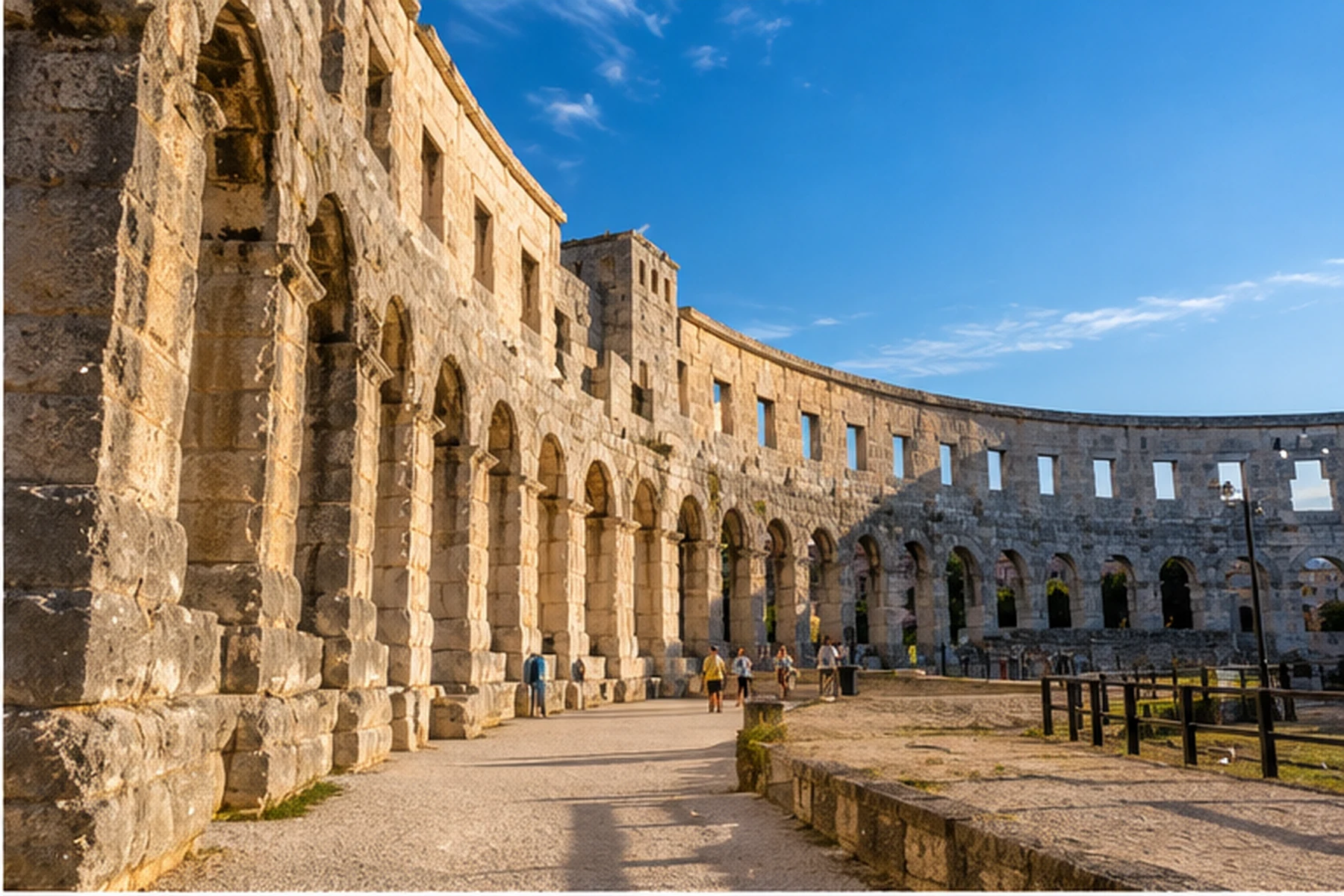
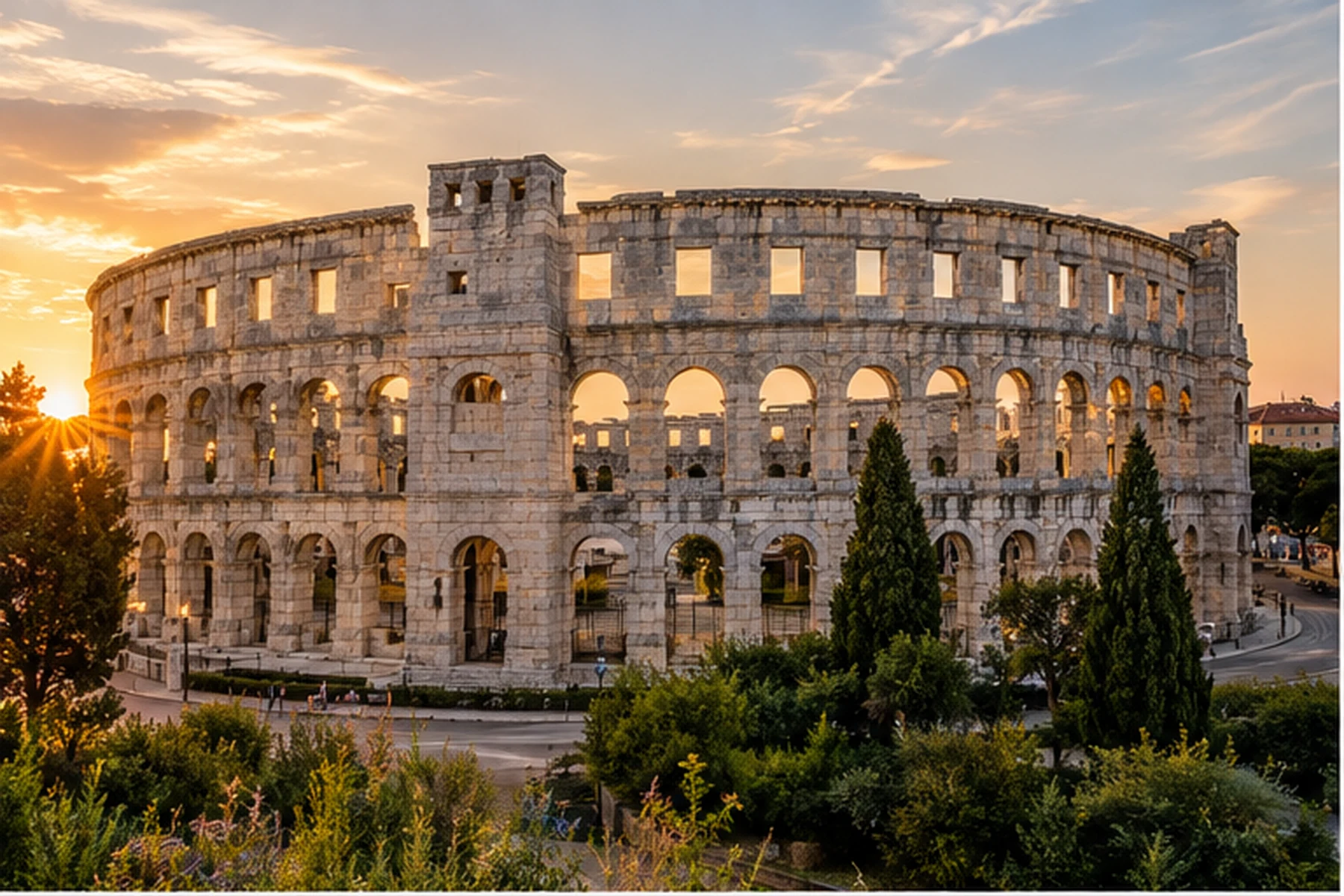
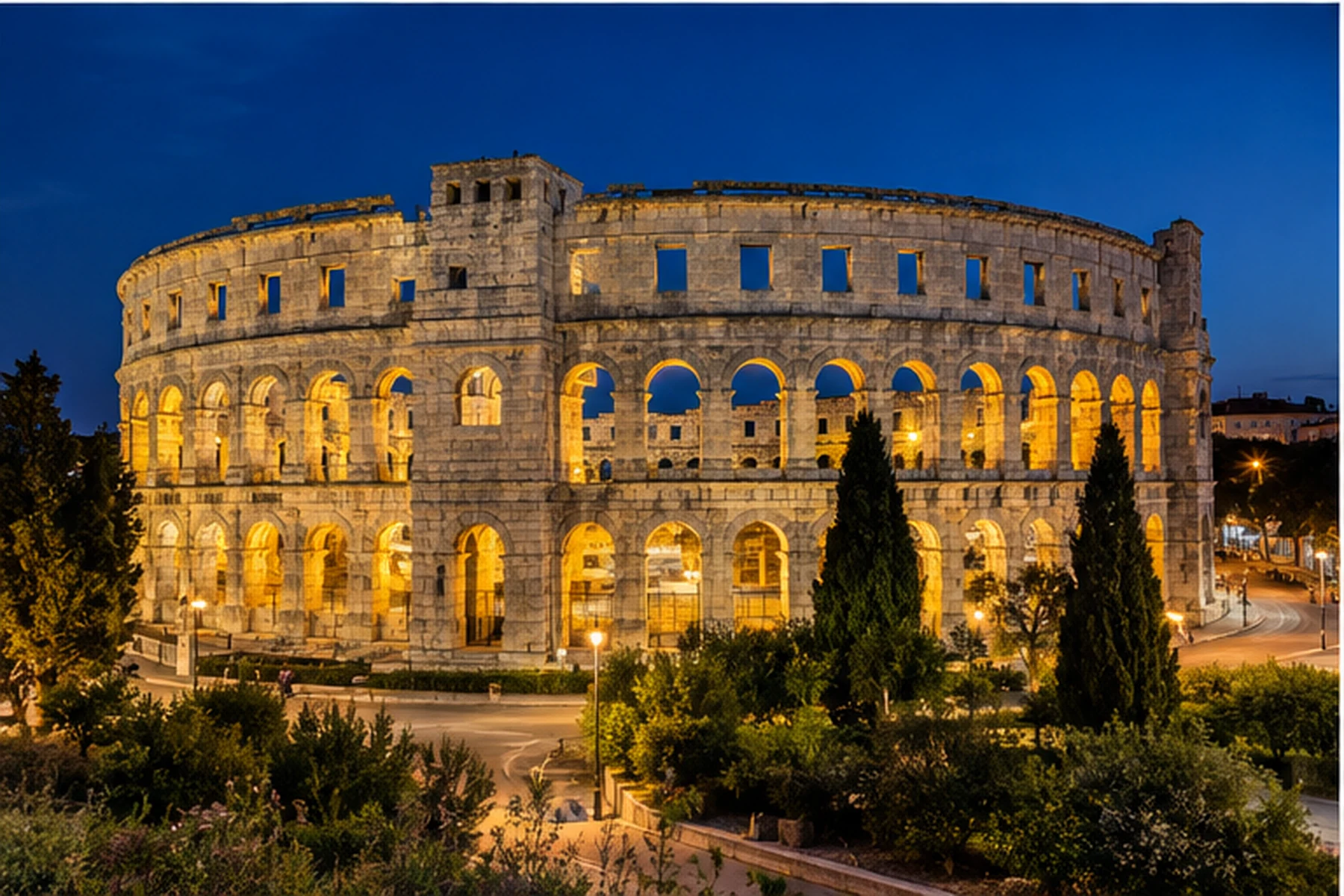
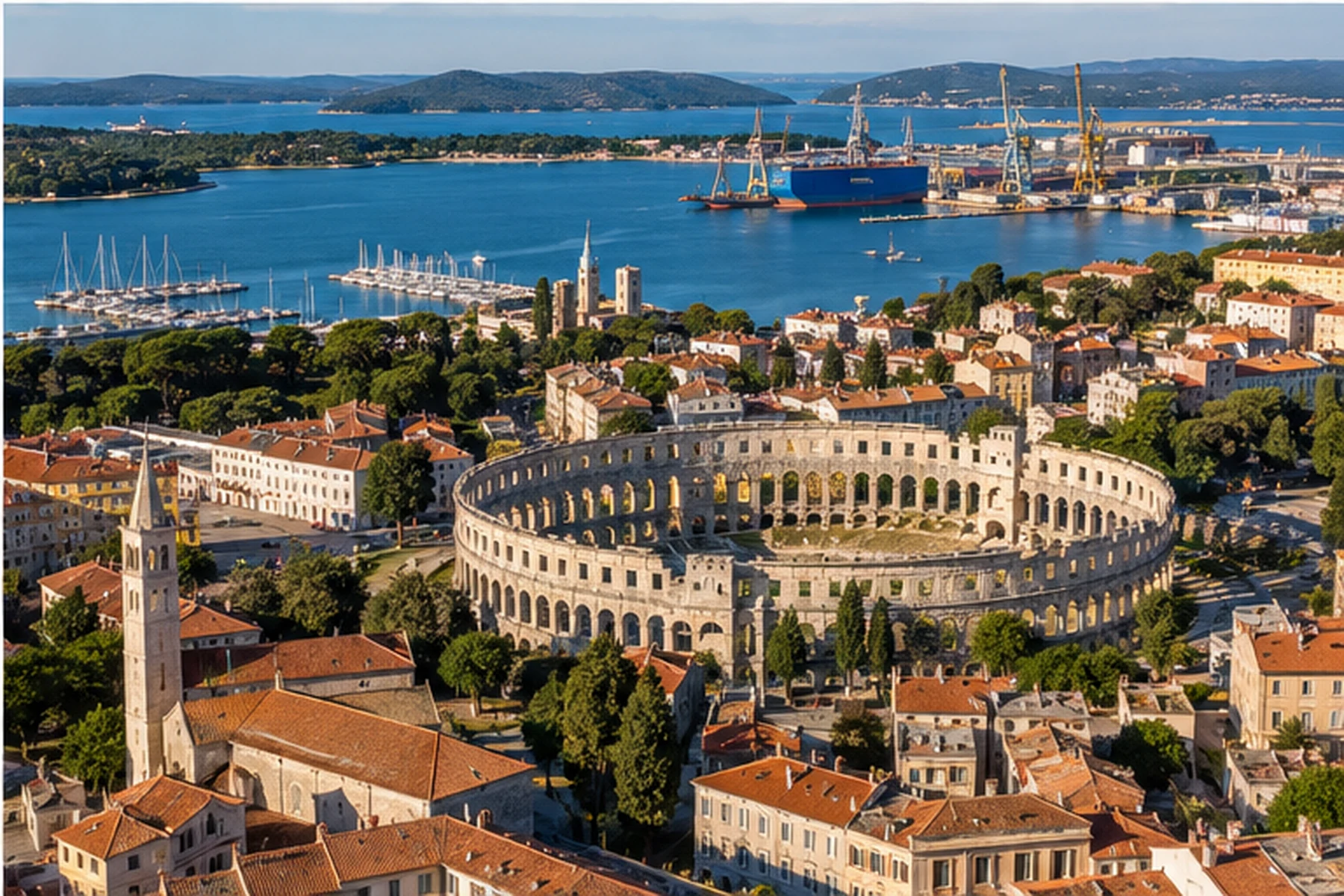
Pula is notable for the survival of its external wall and for four rectangular towers integrated into the structure. Its relationship with the modern city and harbour is also unusually legible.
Do not reduce the comparison to “which is better”
They served related Roman functions but developed in different urban contexts and at different scales. Comparing dimensions, circulation, preservation and setting reveals more than a simple ranking.
Frequently asked questions
The Colosseum is larger in overall dimensions and estimated ancient capacity.
Both belong to the first century Roman world, but their construction sequences differ.
The comparison helps explain scale, Roman amphitheatre design and the distinctive preservation of Pula’s outer structure.
Time-sensitive visitor information is dated and linked to the official Arena Pula / Archaeological Museum of Istria pages. Historical dimensions and monument facts are based primarily on museum documentation and the Croatian Encyclopedia.