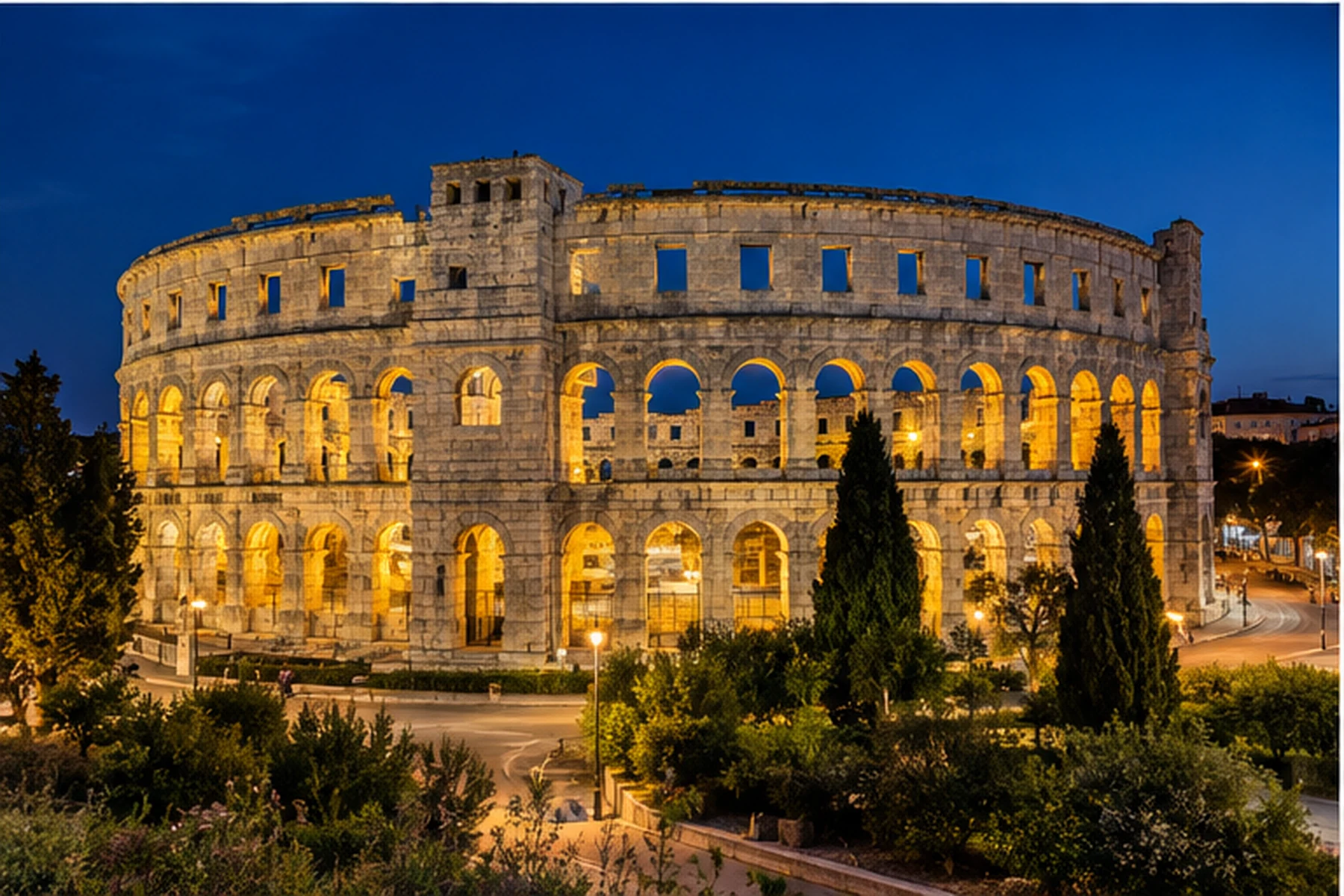
From Roman spectacle to medieval survival, archaeology and the modern cultural stage.
1st century — construction
The amphitheatre took shape during the first century. Croatian encyclopedic sources describe an early, smaller Augustan phase, enlargement under Claudius and the final form under the Flavian dynasty. The Archaeological Museum also places construction in the first century and notes imperial financing.
AD 404 — the games end
The official Arena history states that Emperor Honorius prohibited the games in 404 after Christianity became the state religion. Use of the building then diminished significantly.
Middle Ages to 1583 — survival under pressure
For centuries, stone from the interior was reused in buildings and fortifications. Medieval authorities tried to stop the removal. In 1458, Pula’s City Council banned demolition and reuse of monument material. In 1583, a proposal to dismantle the outer wall and move it to Venice was opposed by senator Gabriele Emo.
18th–21st centuries — research and conservation
Archaeological investigation began in the mid-18th century and expanded under Austrian rule. Conservation has continued into modern times, with major 20th- and 21st-century repair campaigns. Today the monument functions simultaneously as archaeological heritage and a cultural venue.